
The Master Guide to Acoustic Slat Wall Panels: How to Silence Room Echoes and Style Modern Florida Spaces (DIY Steps, NRC Ratings & 2026 Design Ideas)
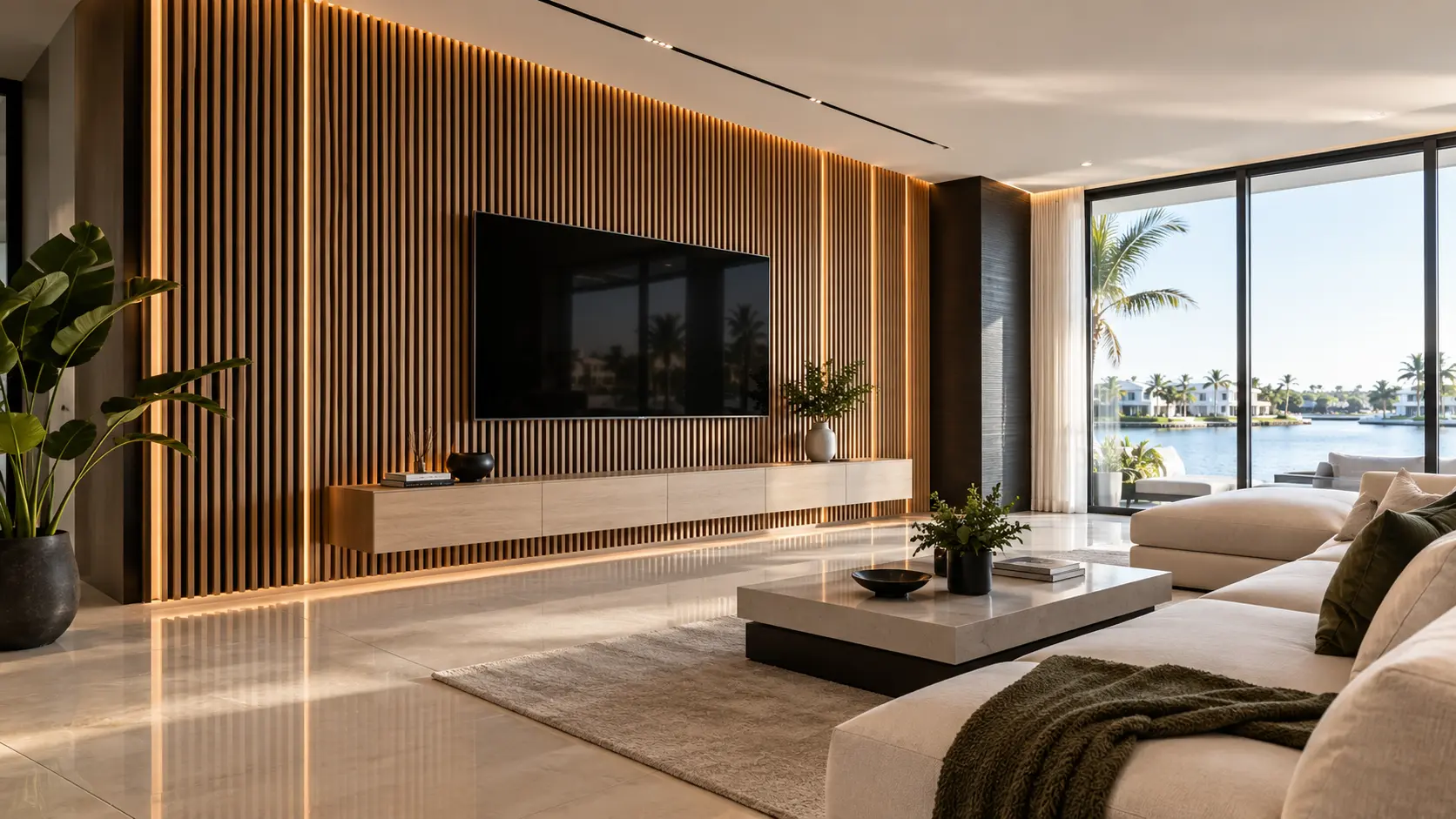
Open concept layouts, 10 foot ceilings, and seamless porcelain tile floors are hallmarks of luxury architecture across the Tampa Bay area. While these expansive architectural features look breathtaking in photographs, they introduce an invisible, frustrating everyday challenge: unbearable acoustic reverberation. Hard surfaces such as bare drywall, glass sliders, quartz countertops, and hard floors reflect sound continuously. The result is a home where television dialogue sounds muddy, kitchen chatter echoes into home offices, and background clatter makes entertaining exhausting.
In 2026, Acoustic Wood Slat Panels have emerged as the premier design meets function architectural solution. Unlike unsightly commercial foam wedges, modern slat panels merge the organic Scandinavian warmth of real architectural timber with studio grade sound absorption. Whether you are building an audiophile grade home theater, designing a focused remote workspace, or transforming a flat living room wall into a textured focal point, this comprehensive guide covers everything from sound acoustics science to hands on installation and Florida climate protection.
1. The Physics of Acoustic Control: Diffusion vs. Absorption
To understand why acoustic slat panels work so effectively, it helps to understand how sound waves behave inside an enclosed room. When sound emits from a human voice or a home theater speaker, it travels in waves until it collides with a boundary. In a room with flat drywall and hard tile, nearly 95% of that sound energy bounces back into the living space, colliding with newly generated waves to create flutter echo.
Acoustic wood slat panels solve this problem through a dual-action acoustic mechanism:
- Wave Diffusion (Front Wood Slats): The three dimensional vertical slats break up flat sound reflections. When a sound wave strikes the rigid, angled edges of the real wood slats, the wave is scattered across multiple directions at diminished intensity rather than bouncing straight back.
- Viscous Dissipation (Recycled PET Felt Backing): The sound waves that penetrate between the slats enter a high density, 9mm acoustic felt core manufactured from 100% recycled PET polyester fibers. The microscopic, non-woven fiber maze traps the sound waves. Through friction and viscous dissipation, sound vibrations are converted into minute, imperceptible thermal energy, completely killing the echo.
2. Deciphering the Specs: NRC Ratings Explained
When evaluating acoustic panels for residential or commercial use, do not rely on visual appearance alone. Look closely at the Noise Reduction Coefficient (NRC), an industry standard rating between 0.0 (total reflection, like bare concrete) and 1.0 (total absorption):
- Direct Wall Mount (NRC 0.60 – 0.75): When panels are screwed or glued directly to flat drywall, they eliminate between 60% and 75% of ambient vocal frequencies and slap echoes. This level of absorption is ideal for living rooms, bedrooms, and dining spaces.
- Batten Mount with Mineral Wool (NRC 0.85 – 0.95): When panels are secured onto 1 inch or 2 inch furring battens with cavity acoustic insulation (like Rockwool or recycled denim) placed behind them, the NRC approaches a near perfect 0.95. This studio grade configuration is recommended for dedicated home cinemas, music production suites, and commercial podcast studios.
3. Engineering Slat Panels for Coastal Florida Humidity
One of the most critical considerations for Tampa homeowners is indoor relative humidity. In coastal regions, standard raw pine or low grade MDF slats will absorb ambient moisture, causing them to bow outward, crack along the veneer line, or delaminate from their backing.
High performance acoustic panels purchased through a dedicated architectural distributor feature structural safeguards:
- Black High Density Fiberboard (HDF) Cores: Unlike soft MDF, high density fiberboard is manufactured under extreme hydraulic pressure with moisture resistant binding resins. It maintains exact dimensional stability regardless of seasonal humidity shifts.
- Quarter Sawn Natural Veneers: Slicing real European White Oak, American Walnut, or Smoked Ash using quarter sawn milling techniques ensures the wood grain resists lateral expansion.
- Antimicrobial PET Backing: Recycled PET acoustic felt does not retain moisture, making it naturally immune to mildew, dry rot, and fungal development inside climate-controlled Florida residences.
4. Creative 2026 Application Ideas (Room by Room)
The Cinematic TV Media Wall
Mounting an 85 inch television against a flat white wall often feels cold and unanchored. Covering the media wall in charcoal or natural oak acoustic slats eliminates distracting wall glare, hides television power cables and HDMI runs within the felt gaps, and enhances center-channel dialogue clarity so you never have to strain to hear movies at night.
The Floor to Ceiling Canopy Transition
Take your primary bedroom or dining room to five-star resort standards. Instead of stopping your feature wall at the ceiling line, run the vertical slats up the drywall and bend them 90 degrees across the ceiling overhead. Adding slim, diffuse LED profile channels recessed between the slats casts a soft, warm ambient downlight that completely transforms the evening mood.
The Ergonomic Home Office Backdrop
With remote and hybrid executive work standard across Florida, having a quiet Zoom background is essential. Installing acoustic panels directly behind your camera desk dampens typing noises and hollow room reverb while presenting a professional, polished architectural aesthetic on video calls.
5. Step by Step DIY Installation Guide
Installing acoustic wood slat panels is remarkably straightforward and can be completed in a single weekend with basic tools.
Tools and Materials Required:
- High grade acoustic slat panels (e.g., standard 94.5" x 23.6" sheets)
- Fine tooth circular saw or Japanese pull saw (for cutting wood slats cleanly)
- Heavy duty utility knife (for slicing through the PET felt backing)
- 1-5/8" black drywall screws (matching the black felt) or structural construction adhesive
- Laser level, tape measure, and stud finder
Installation Steps:
- Wall Prep: Remove switch plates and wipe down the drywall to ensure a clean, dust free surface. If your wall is painted a bright color, paint the perimeter flat black so no drywall shows through the felt margins.
- Measure and Cut: Measure your ceiling height accurately. Mark your cut line on the face of the panel using painter's tape to prevent splintering. Cut the wood slats using a fine-tooth blade, then slice the felt backing with a sharp utility knife.
- Secure to the Wall:
- Screw Method (Recommended): Drive black screws directly through the black felt backing into wall studs or heavy duty drywall anchors. Space screws every 12 to 16 inches vertically. The black screw heads sink flush into the black felt, rendering fasteners completely invisible.
- Adhesive Method: Apply a continuous zigzag bead of heavy-duty hybrid polymer adhesive across the back of the PET felt and press the panel firmly against the wall, holding for 30 seconds.
- Seamless Panel Interlocking: Butt adjacent panels tightly together. The engineered felt edge on one side tucks under the protruding wood slat of the neighboring panel, creating a flawless, invisible joint across entire 20 foot wall spans.
The Bottom Line
Acoustic wood slat panels solve one of the most frustrating aspects of modern architecture room noise and echo while infusing contemporary living spaces with tactile, biophilic luxury. By selecting moisture-resistant HDF cores and pairing them with studio-grade PET backing, Florida homeowners achieve an interior that looks magnificent and sounds remarkably peaceful.
Ready to run your fingers over real European oak and walnut slats and experience acoustic dampening in person? Visit the Southern Design Warehouse architectural showroom in Tampa by checking out our showroom and contact page. You can also view our full collection of active styles via our live online inventory, email our design specialists at info@southerndesignwarehouse.com, or call us at (813) 845-1111 for personalized contractor or homeowner pricing.